

Records with meaning
A database separates information into meaningful fields. In an digital exhibit catalogue, a model name, manufacturer and accession number serve different purposes. Consistent entry makes reliable searching possible.
A longer history
Database development predates personal computing. Edgar F. Codd’s 1970 relational model was a major milestone. Desktop applications later brought organised records, forms and reports to smaller organisations, although not every catalogue program was a full relational system.
Asking useful questions
Users could select records matching a condition instead of inspecting every card. One collection of data could support several reports without being copied into separate lists.
Human judgement remains essential
Alternative spellings, uncertain dates and missing values require interpretation. A manufacturing date is not the same as a purchase date. For a digital history collection collection, recording the source and confidence of a statement matters as much as its position in a table. The database makes information manageable; it does not turn an assumption into a fact.
Sources and further reading
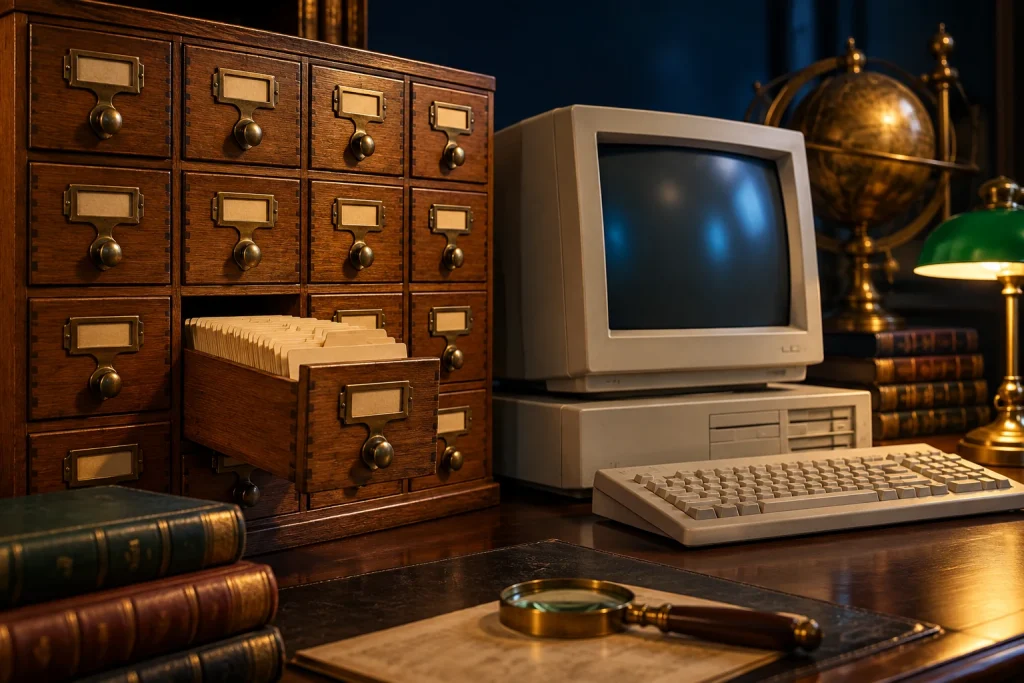
The accompanying image was created with AI for PC.gr as an artistic illustration of this article’s subject.
Σύνταξη & Επιμέλεια: Βλαχογιάννης Λ. Γεώργιος
Μέλος της Ένωσης Συντακτών Εφημερίδων, Περιοδικών και Ηλεκτρονικών Μέσων Βορείου Ελλάδος