

Characters and codes
Older platforms used different code pages. The same numeric value could represent different characters, making a Greek document appear unreadable elsewhere even when its bytes were intact.
Encoding is not a font
Encoding identifies characters; a font supplies their visual forms. Missing glyphs and incorrectly decoded text are different problems. Changing a font cannot reliably repair a wrong interpretation of the file.
A common framework
Unicode provides a shared character framework across writing systems. Encoding forms such as UTF-8 define how that information is represented in data. Accents and combining characters mean that visually similar strings can still require careful comparison.
Recovering older Greek text
Application, platform and date help identify an old file’s encoding. Keep an untouched copy and document conversions rather than replacing unfamiliar symbols blindly. The history of Greek computing includes this quieter work of making language travel reliably between machines and generations.
Sources and further reading
- Unicode Consortium — What is Unicode?
- Unicode Consortium — Technical Introduction
- Unicode Consortium — UTF FAQ
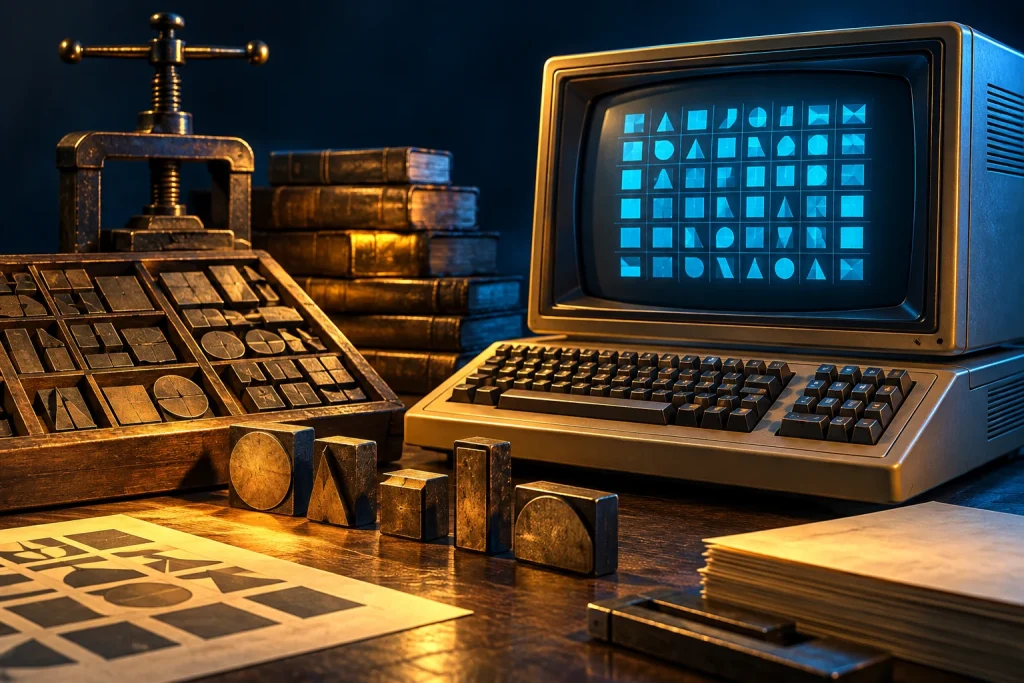
The accompanying image was created with AI for PC.gr as an artistic illustration of this article’s subject.
Σύνταξη & Επιμέλεια: Βλαχογιάννης Λ. Γεώργιος
Μέλος της Ένωσης Συντακτών Εφημερίδων, Περιοδικών και Ηλεκτρονικών Μέσων Βορείου Ελλάδος