

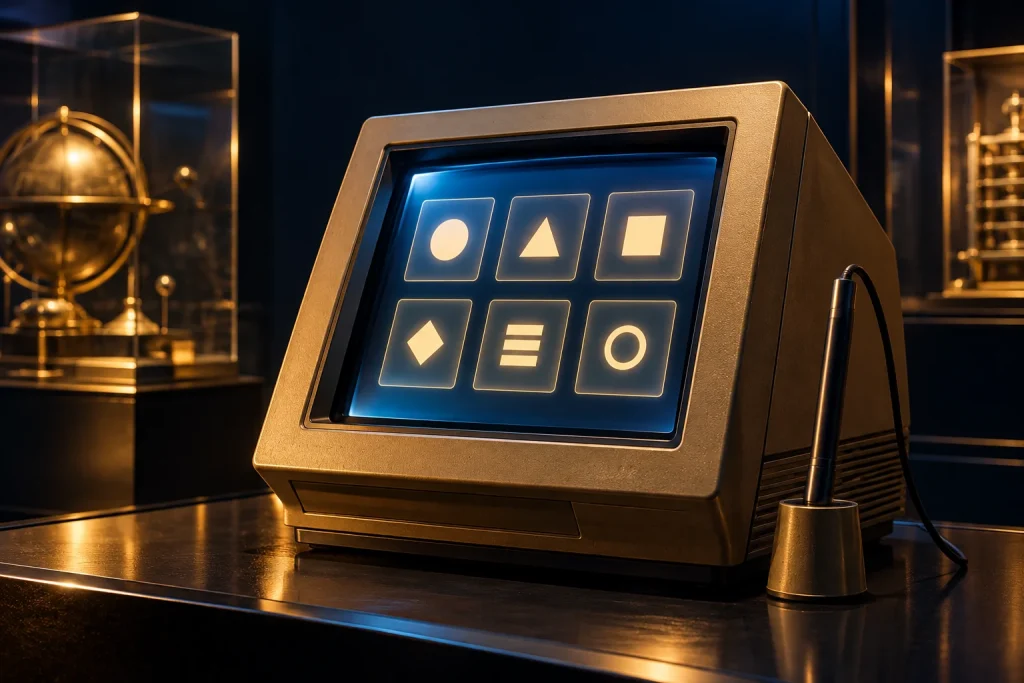
Input meets display
Touch brings the selection surface and the displayed object together. It can simplify an action, but fingers obscure content and differ from a mouse pointer in precision.
Earlier paths
PLATO is an important educational example in the history of touch interaction. The University of Michigan digital archive places such innovations within a wider computing community.
Several technologies
Pressure, electrical properties and interrupted light beams can support different touch systems. A stylus or glove therefore does not behave identically on every device.
Design still matters
Large targets, feedback and clear routes are essential. Copying a dense mouse interface is not enough. Screen angle and body position also affect comfort and access. A historical touchscreen demonstrates that successful interaction emerges from hardware and interface design together, rather than from a sensor alone.
Sources and further reading
- University of Michigan — Citizens of PLATO Digital Archive
- Computer History digital history collection — Timeline
The accompanying image was created with AI for PC.gr as an artistic illustration of this article’s subject.
Σύνταξη & Επιμέλεια: Βλαχογιάννης Λ. Γεώργιος
Μέλος της Ένωσης Συντακτών Εφημερίδων, Περιοδικών και Ηλεκτρονικών Μέσων Βορείου Ελλάδος