

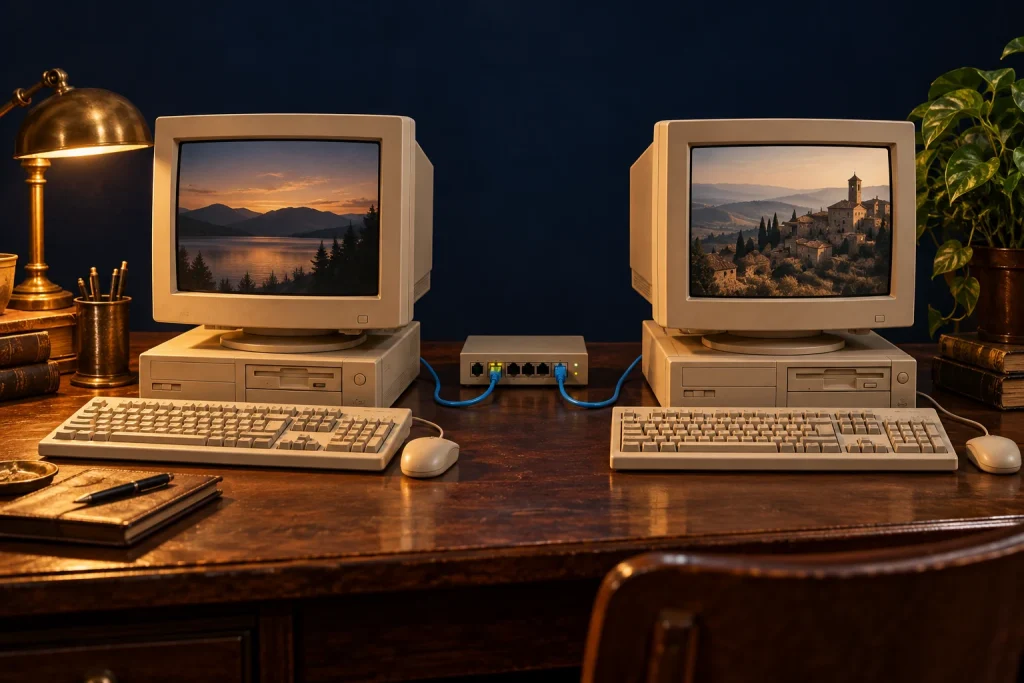
Networking let one printer serve several desks and gave teams a common place for files. The personal computer became part of a shared working environment.
Local does not mean Internet
A LAN connects devices within a limited area and can operate without an external Internet connection. Cables provide a physical path, while protocols and software determine the services available over it.
Ethernet’s changing forms
Ethernet grew from research at Xerox PARC in the 1970s, including work by Bob Metcalfe and colleagues. Cabling, speeds and interconnection equipment evolved substantially. The continuing name should not obscure differences between generations.
Sharing needs organisation
File servers and network printers reduced manual transfers. Teams still needed rules for access, editing, versions and backups. A connection could move information but could not decide how people should manage it.
A common infrastructure
Schools and offices developed shared services and new support roles. One infrastructure problem could now affect many users. A network adapter or old hub therefore represents a change from isolated computing to participation in a common digital workspace.
Sources and further reading
- Computer History digital history collection — Computers Talking to Computers
- Computer History digital history collection — 1973
The accompanying image was created with AI for PC.gr as an artistic illustration of this article’s subject.
Σύνταξη & Επιμέλεια: Βλαχογιάννης Λ. Γεώργιος
Μέλος της Ένωσης Συντακτών Εφημερίδων, Περιοδικών και Ηλεκτρονικών Μέσων Βορείου Ελλάδος