

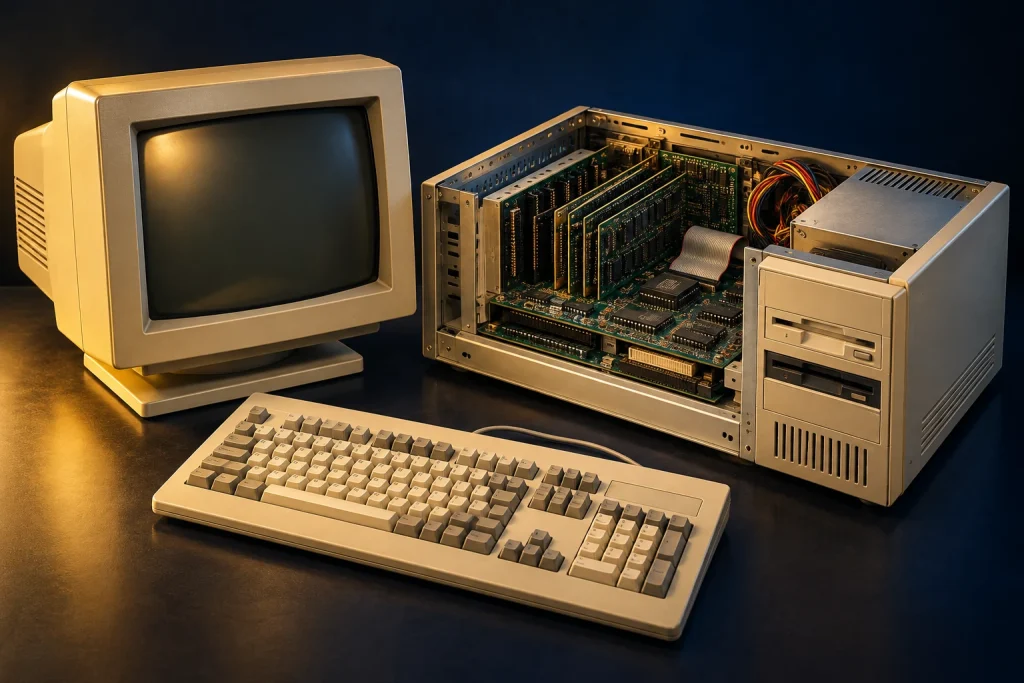
In personal computing, “compatible” promised more than a similar appearance. It suggested that software or peripherals could work across different systems, reducing uncertainty and expanding choice.
A reference point in 1981
IBM introduced the Personal Computer 5150 in August 1981. Its use of available components and published technical documentation helped establish a reference platform for software, expansion cards and other manufacturers’ machines.
Published specifications did not make every component free to copy. The BIOS was an important area for independently developed compatible implementations. Matching the behaviour of the system mattered more than choosing a similar processor.
An expanding market
Users could compare price and support while retaining access to familiar applications. Developers and peripheral manufacturers could address a larger audience. More software attracted users, while more users encouraged investment in additional products.
Compatibility was not absolute
Graphics adapters, memory configurations, displays and operating-system versions still differed. Programs that relied directly on hardware details could behave differently on machines described as compatible. Requirements and support tables therefore remained important.
Beyond individual machines
The story shows how shared interfaces and expectations can shape technological development. A computer’s usefulness depended partly on what could run around it. Different cases and brands in a historical collection can represent branches of the same platform while retaining distinctive design choices.
Sources and further reading
The accompanying image was created with AI for PC.gr as an artistic illustration of this article’s subject.
Σύνταξη & Επιμέλεια: Βλαχογιάννης Λ. Γεώργιος
Μέλος της Ένωσης Συντακτών Εφημερίδων, Περιοδικών και Ηλεκτρονικών Μέσων Βορείου Ελλάδος