

Try before deciding
Shareware allowed a trial version to circulate so that users could evaluate a program before registering or paying under its terms. Time limits, feature restrictions and registration arrangements varied between products.
Different from unrestricted use
Shareware was not automatically public-domain or open-source software. Permission to copy an evaluation version did not remove copyright or licence conditions. This distinction matters when interpreting historical software collections.
Independent development
Utilities, organisers and games could reach an audience without relying entirely on boxed retail distribution. Documentation explained compatibility, installation and registration. Feedback could connect a user directly with a small development team.
Documents worth preserving
Readme files and registration forms record both technical requirements and a distinctive relationship between maker and customer. They show how trust was built through practical use. The historical interest of shareware lies as much in that relationship as in the individual programs that travelled on disks and through online services.
Sources and further reading
- Association of Software Professionals — The Origin of Shareware
- Association of Software Professionals — The History of Shareware & PsL
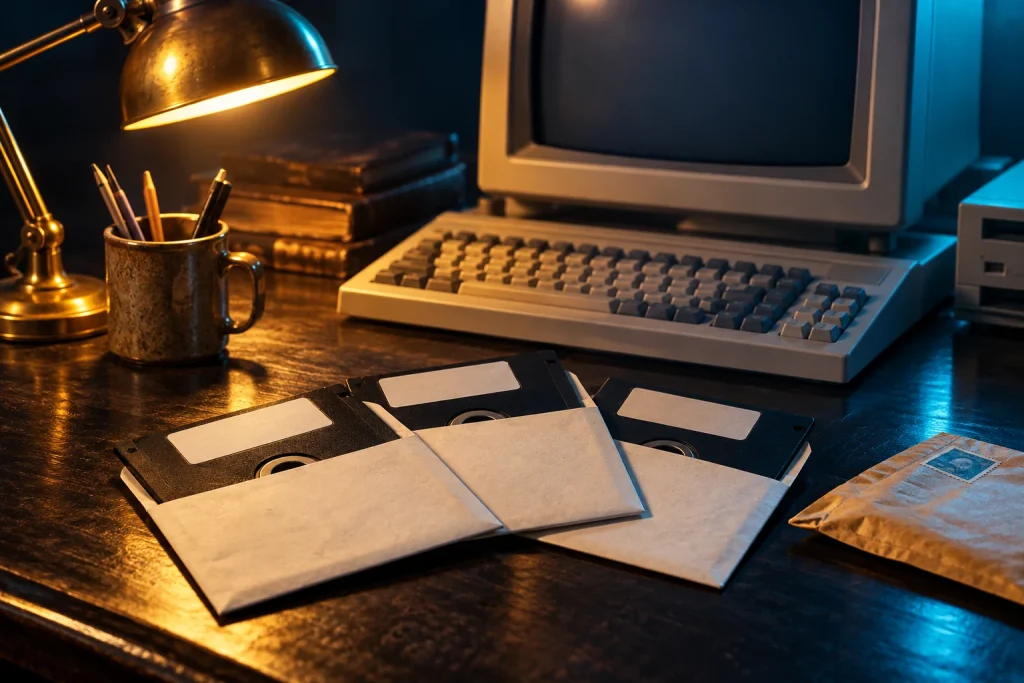
The accompanying image was created with AI for PC.gr as an artistic illustration of this article’s subject.
Σύνταξη & Επιμέλεια: Βλαχογιάννης Λ. Γεώργιος
Μέλος της Ένωσης Συντακτών Εφημερίδων, Περιοδικών και Ηλεκτρονικών Μέσων Βορείου Ελλάδος