

Moving heat
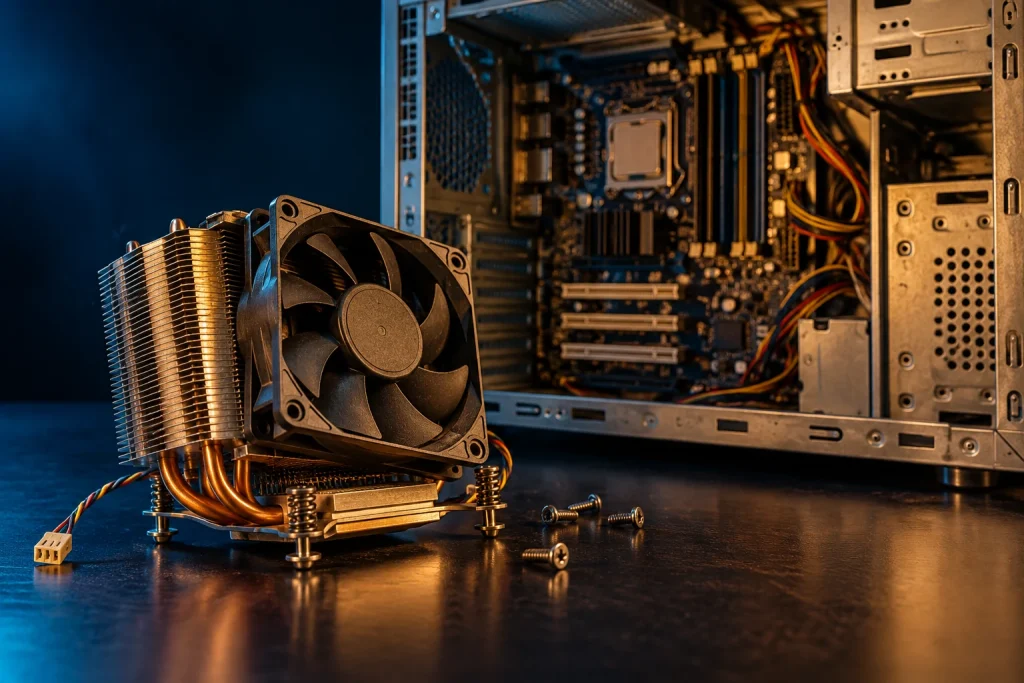
Computer components generate heat. A heatsink increases the surface available for heat transfer, while airflow carries energy away. The complete path matters, not just the size of an individual cooler.
The enclosure participates
Vents, spacing and component placement affect thermal performance. Different generations had different requirements, so an old design should not be judged only against the appearance of a modern PC.
Noise and compactness
Cooling must coexist with the room where people work. Fan control and compact layouts balance thermal needs, sound and available space. The shape of a computer therefore reflects engineering choices as well as styling.
Historical evidence
Original ducts and fans document those choices. Operating vintage equipment calls for technical assessment; replacing one noisy component does not establish the condition of the whole machine. Cooling reminds us that digital activity depends on physical materials, energy and carefully planned movement of air.
Sources and further reading
The accompanying image was created with AI for PC.gr as an artistic illustration of this article’s subject.
Σύνταξη & Επιμέλεια: Βλαχογιάννης Λ. Γεώργιος
Μέλος της Ένωσης Συντακτών Εφημερίδων, Περιοδικών και Ηλεκτρονικών Μέσων Βορείου Ελλάδος