

More than a new camera
Digital photography moved part of the photographic process to the personal computer. Importing, selecting and arranging pictures became familiar domestic tasks. Resolution and compression mattered, but so did the ability to find an image months later.
The desktop darkroom
Image software allowed cropping, exposure adjustments and colour correction. Keeping an untouched original made experimentation reversible. The Computer History digital history collection’s Photoshop exhibition documents one influential strand of this relationship between photography and software.
A connected workflow
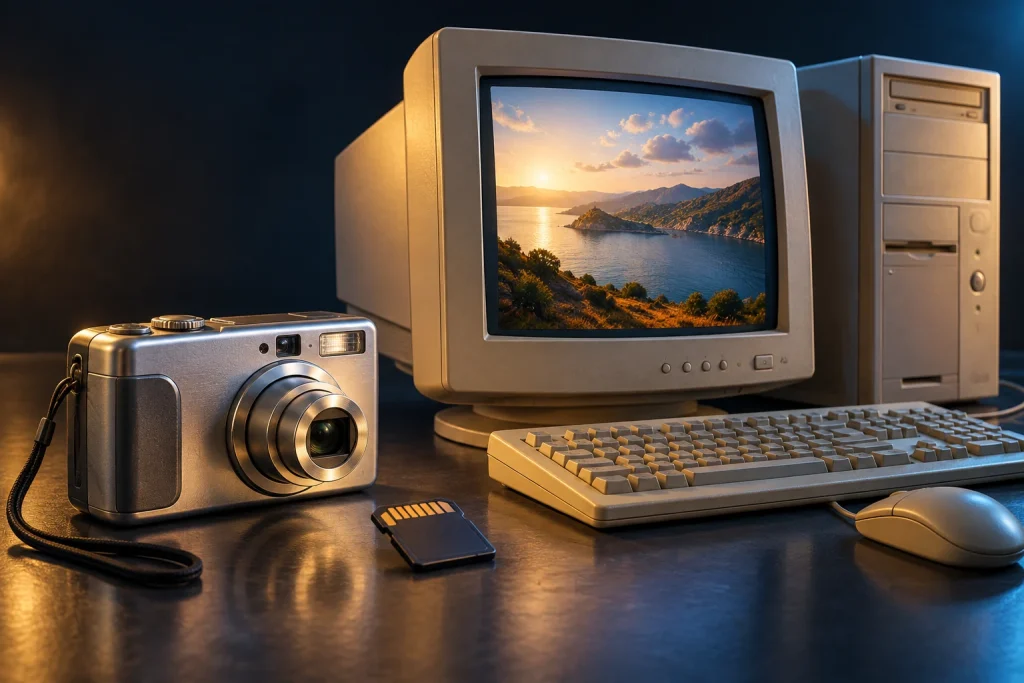
Cables, memory cards, readers and transfer applications formed a chain between capture and display. A camera preserved without these accessories tells only part of its story. Compatibility and the location of imported files could be as important to users as the camera’s controls.
Memory needs organisation
Folders and descriptive names gave photographs context. Increasing the number of pictures did not automatically create a useful archive. The historical change was therefore both technical and personal: the PC became a place where everyday experiences were selected, interpreted and shared.
Sources and further reading
- Computer History digital history collection — Photoshop
- Camera digital history collection — The time of the scanners
The accompanying image was created with AI for PC.gr as an artistic illustration of this article’s subject.
Σύνταξη & Επιμέλεια: Βλαχογιάννης Λ. Γεώργιος
Μέλος της Ένωσης Συντακτών Εφημερίδων, Περιοδικών και Ηλεκτρονικών Μέσων Βορείου Ελλάδος