

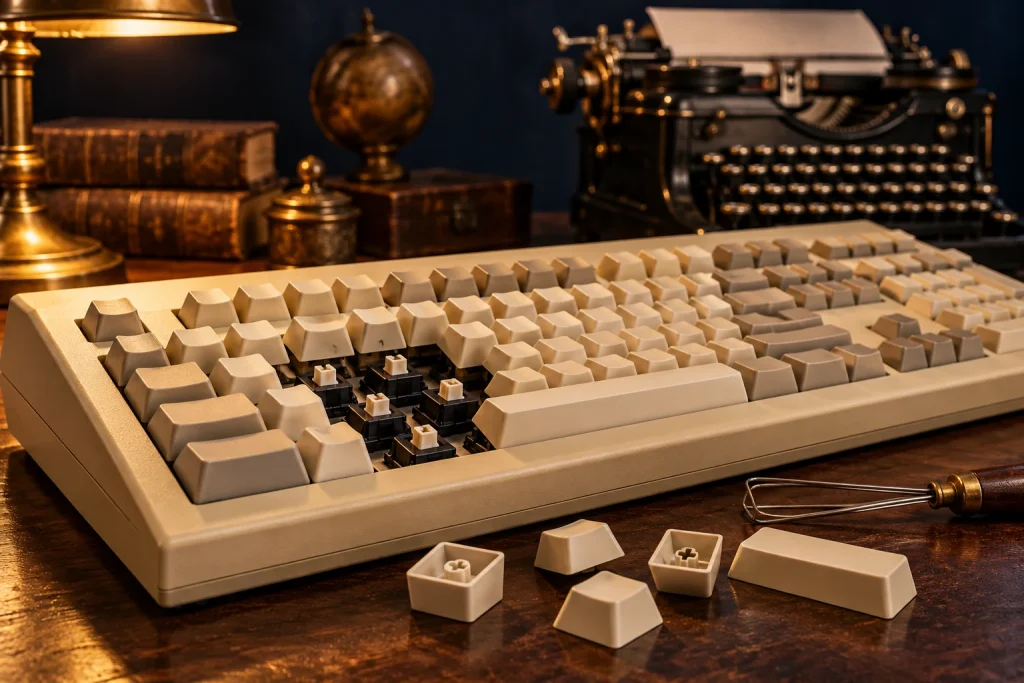
A keyboard combines mechanical design, language conventions and working habits. Familiarity can make its history easy to overlook.
Inherited arrangements
Computers drew on typewriter and terminal practices rather than starting from a blank slate. Letter areas, number pads, arrows and function keys served different tasks, with layouts varying by machine and period.
The feel of a key
Different sensing mechanisms change travel, sound and force. “Mechanical” alone does not describe every characteristic. Feedback that suits one user or workspace may not suit another.
Commands and language
Modifiers such as Control and Alt expanded the available actions. Applications developed shortcuts that required learning. A physical key’s position also differs from the character produced under a particular language setting; printed Greek legends and the active layout are separate facts.
Evidence of everyday use
Worn legends and polished surfaces reveal repeated activity. Preserving a keyboard means respecting both its mechanism and its history. It belongs in the story as the place where users entered instructions, revised ideas and made the computer personal.
Sources and further reading
The accompanying image was created with AI for PC.gr as an artistic illustration of this article’s subject.
Σύνταξη & Επιμέλεια: Βλαχογιάννης Λ. Γεώργιος
Μέλος της Ένωσης Συντακτών Εφημερίδων, Περιοδικών και Ηλεκτρονικών Μέσων Βορείου Ελλάδος