

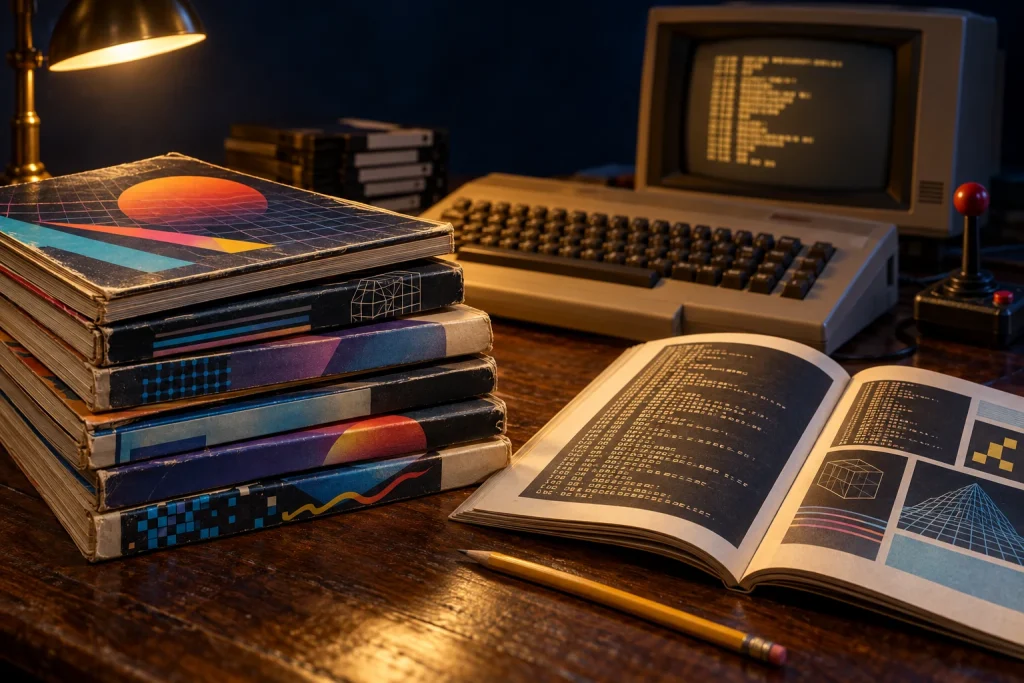
An old computer magazine preserves more than outdated news. It records what readers found exciting, what problems they faced and what they expected technology to become.
A practical guide
Reviews, comparisons and advice offered information that readers could revisit and annotate. A computer review might discuss keyboard comfort, software availability and value as well as specifications, connecting manufacturers’ claims with practical questions.
Learning by typing
Program listings invited active participation. Typing and correcting a program became an informal lesson, while explanations encouraged experimentation. Identifying the intended machine mattered because commands and memory limits varied.
Readers as contributors
Letters, questions and corrections recorded everyday experience. A small technical query can reveal something missing from an official product description. The publication became a meeting point for different kinds of knowledge.
Reading critically
Editorial coverage should be distinguished from advertising, and predictions from established facts. Prices need their historical economic context. Cataloguing should record title, issue number, date, publisher and provenance; uncertain details should remain explicitly uncertain.
Beyond the cover
A cover introduces a period, but the complete issue provides a richer picture. Magazines connect surviving hardware with the conversations around it, preserving how people learned about, evaluated and imagined computers.
Sources and further reading
- Centre for Computing History — Magazine collection example
- Computer History digital history collection archive — Microcomputer Data Communication Systems
The accompanying image was created with AI for PC.gr as an artistic illustration of this article’s subject.
Σύνταξη & Επιμέλεια: Βλαχογιάννης Λ. Γεώργιος
Μέλος της Ένωσης Συντακτών Εφημερίδων, Περιοδικών και Ηλεκτρονικών Μέσων Βορείου Ελλάδος