

A world described
Text adventures organise locations, objects and changing situations. Players type actions and discover the story through exploration. The command parser recognises a limited vocabulary, so feedback must distinguish an impossible action from an unfamiliar expression.
From research to home computers
Zork connects early computing communities with commercial interactive fiction. MIT’s preserved source code documents a particular stage of its development. Home-computer versions brought text-driven exploration to a wider audience.
Beyond the screen
Paper maps and notebooks helped players track routes and clues. For Greek-speaking users, English-language adventures could combine logical puzzles with vocabulary challenges. Translation involves commands and wordplay as well as descriptive prose.
A different measure of richness
These games demonstrate that atmosphere does not require elaborate graphics. Carefully chosen language and a responsive world can sustain curiosity. Their historical value lies in the meeting of literary craft, software design and the player’s ability to imagine what the screen describes.
Sources and further reading
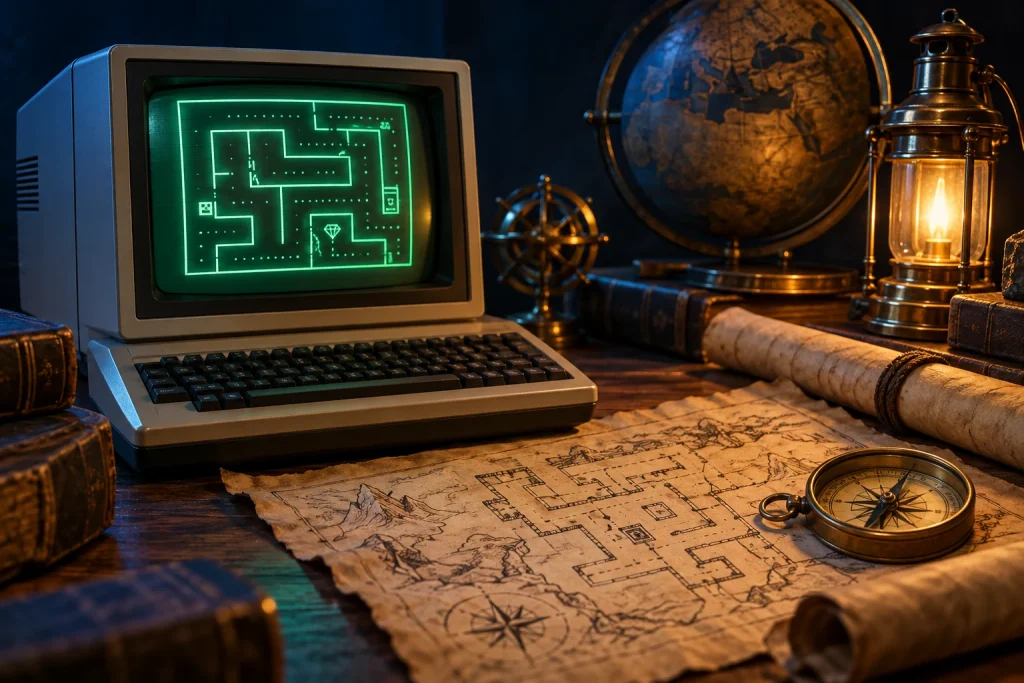
The accompanying image was created with AI for PC.gr as an artistic illustration of this article’s subject.
Σύνταξη & Επιμέλεια: Βλαχογιάννης Λ. Γεώργιος
Μέλος της Ένωσης Συντακτών Εφημερίδων, Περιοδικών και Ηλεκτρονικών Μέσων Βορείου Ελλάδος