

Internet and Web
The Internet connects networks; the World Wide Web is a service built on that infrastructure. Email and other network activities have their own histories. This distinction matters when describing early connected computers.
Following a link
Tim Berners-Lee proposed a linked information system at CERN in 1989. Web addresses, hypertext and page transfer allowed readers to move between documents held in different places. Back buttons, bookmarks and history then helped people navigate.
Reading and publishing
Browsers brought remote information to the desktop while personal websites gave small communities a publishing outlet. Slow connections and limited displays shaped early design. Access also created a need to assess authorship, dates and sources.
Preserving an experience
An archived website records navigation and visual conventions as well as words. Missing images or external resources can make that record incomplete. A historical presentation should distinguish surviving pages from modern reconstruction. The browser’s lasting contribution was to make the PC a gateway to linked knowledge rather than only a machine for local tasks.
Sources and further reading
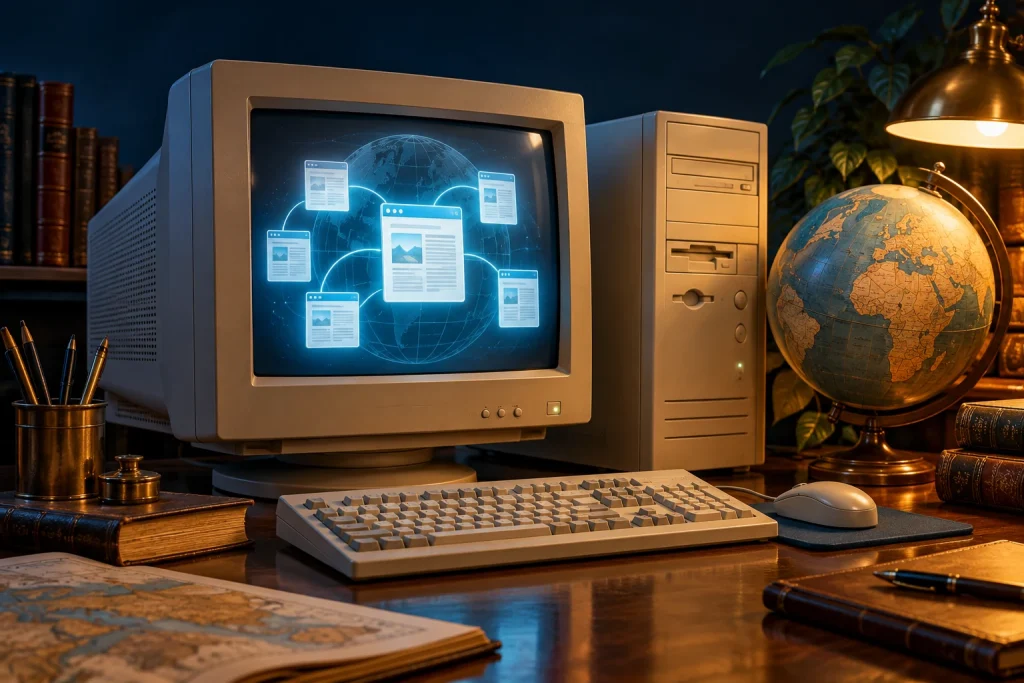
The accompanying image was created with AI for PC.gr as an artistic illustration of this article’s subject.
Σύνταξη & Επιμέλεια: Βλαχογιάννης Λ. Γεώργιος
Μέλος της Ένωσης Συντακτών Εφημερίδων, Περιοδικών και Ηλεκτρονικών Μέσων Βορείου Ελλάδος