

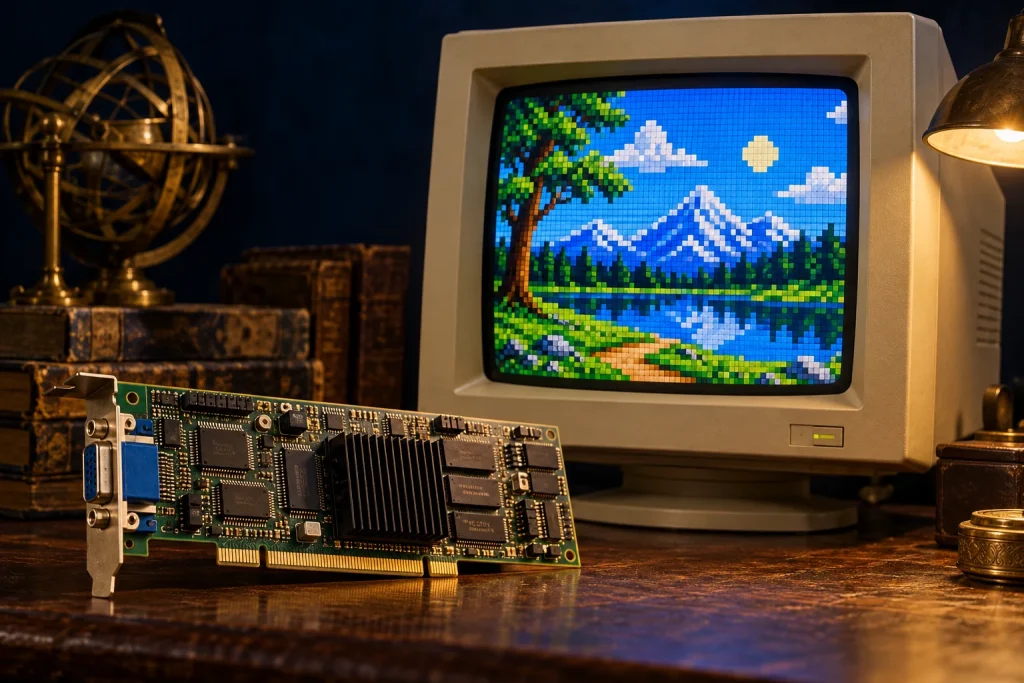
Visible squares and limited colours reveal the constraints behind early computer images. Designers turned small palettes and scarce memory into recognisable objects and convincing worlds.
Two different limits
Resolution describes the image grid. Colour capability describes how many colours can be represented, including distinctions between a total palette and colours displayed simultaneously. Old specifications need to be read with these differences in mind.
Hardware and display
Home computers and IBM-compatible PCs followed different paths. CGA, EGA and VGA were important parts of the compatible-PC story, while other systems supplied their own graphics features. The monitor and connection also shaped the result; a modern flat display may not recreate a CRT’s appearance.
Making every pixel count
Silhouette, contrast and a single well-placed pixel could determine whether a game character was readable. Patterns of neighbouring dots suggested additional shades. Programming and visual judgement worked together within limited resources.
More than entertainment
Improved graphics supported diagrams, design tools and document previews. A historical screenshot becomes more informative when its machine and display mode are recorded. Its pixels then reveal the choices behind the image rather than merely its age.
Sources and further reading
The accompanying image was created with AI for PC.gr as an artistic illustration of this article’s subject.
Σύνταξη & Επιμέλεια: Βλαχογιάννης Λ. Γεώργιος
Μέλος της Ένωσης Συντακτών Εφημερίδων, Περιοδικών και Ηλεκτρονικών Μέσων Βορείου Ελλάδος