


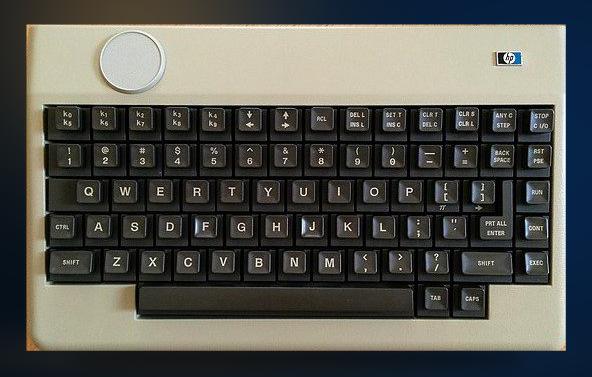
Hewlett Packard 9816 | TechMuseum
Year of manufacture: 1982
Technical Specifications:
- Processor: Motorola 68000, 8 MHz
- RAM: 128 to 512 KB
- FDD: –
- HDD: –
- Audio: Beeper
- Connectors/Ports: Serial, HP-IB
- Case: Keyboard type
- Monitor: Monochrome
- OS: HP Pro BASIC
The Hewlett Packard 9816 has a Motorola 68000 processor at 8 MHz and memory of 128 up to 512kB. It ran with the operating system of the HP Pro BASIC version.
Hewlett-Packard Company (known as HP) was an American information technology company that went defunct in 2015 (now as HP Inc.). The corporation had an expanded area of operations. Divisions included the hardware and software production and solutions to home and business users alike. The company was established after a big contract with Disney for an animated movie.
In the 1960s HP partnered with Sony to develop high quality products. At the end of the decade, it presented the world’s first device to be called a personal computer. The HP 9100A was marketed as a programmable calculator so as to avoid the rejection of gurus due to dissimilarity with IBM.
During the 1980s the company launched programmable calculators, later desktop computers, and personal digital assistants (PDAs). Best selling product lines were the HP 9xxx series and the LX series of the PDAs. Between 2007 and 2013, HP was world’s leader in personal computer manufacture. The first place in classification later held Lenovo, a strong rival.
That was just a snapshot on the presentation of the techmuseum series. Indulge more into the history. Continue reading more about the present model, the Hewlett Packard 9816 here.
PC.GR
The history of personal computers
Explore this exhibit with the video guide, which opens the PC.gr presentation in a video window.