

Commodore Amiga 4000T | TechMuseum
Year of manufacture: 1994
Technical Specifications:
- Processor: Motorola 68040, 25 MHz
- RAM: 2 MB
- FDD: Floppy disk 3.5″, 1.76 MB
- HDD: 3.5″ hard disk
- Audio: Four channels, stereo
- Connectors/Ports: Keyboard, serial, two mouse, analog video output, two audio output, headphones, parallel, external disk
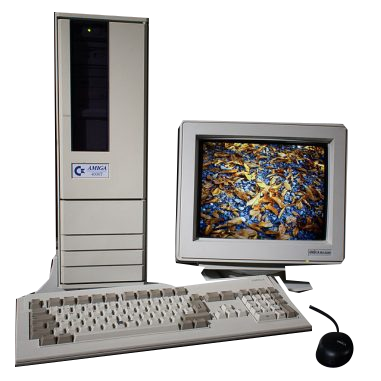
- Case: Tower type
- Monitor: Color
- OS: Amiga OS 3.1
The Commodore Amiga 4000T features a Motorola 68040 processor at 25 MHz and memory of 2MB. Equipped with a floppy disk of 3.5” at 1.76MB and an HDD, it runs with the operating system of AmigaOS version 3.1.
Commodore introduced the AMIGA family computers in mid-1980s, 1985. The original models run with 16-bit or 32-bit processors and memory RAM of 256kB or more. The Amiga series brought a substantial improvement on performance and graphics compared with the Atari ST or Macintosh counterparts. Of course the hardware improved progressively through the new releases.
The best-selling model of the series was the Amiga 500, but others such as the Commodore Amiga 4000T, 600, 1000, 2000 or 4000 sold millions of units as well. Becoming widely available, the models were advertised as versatile, all-purpose machines for business use.
The end of the series came with the announcement of the company going bankrupt in April 1994, but followed many successors to the Amiga line, such as Genesi, Eyetech. The Amiga Operating system has influenced others, like MorphOS and AROS.
That was just a snapshot on the presentation of the techmuseum series. Indulge more into the history. Continue reading more about the present model, the Commodore Amiga 4000T here.
PC.GR
The history of personal computers
Explore this exhibit with the video guide, which opens the PC.gr presentation in a video window.