
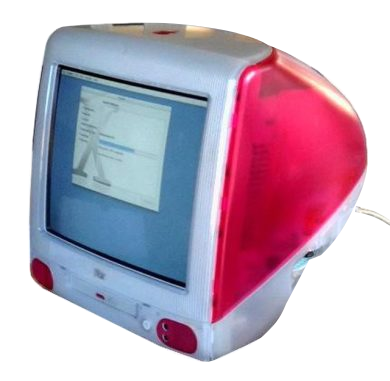
Apple iMac G3
Year of manufacture: 1998-2003
Technical Specifications:
- Processor: PowerPC 750, 233 MHz- 333 MHz
- RAM: two slots 32 MB
- FDD: –
- HDD: 4-6 GB
- Audio: stereo
- Connectors/Ports: two USB 1.1, two headphone, analog audio input
- Case: Monitor type
- Monitor: Color
- OS: Mac OS 8.1 or Mac OS 8.5
The Apple iMac G3 features a PowerPC 750 processor at between 233 and 333MHz and two memory slots of 32MB. Equipped with an HDD at 4GB up to 6GB it runs with the operating system of the MacOS 8.1 up to 8.5 version.
The Apple Power Macintosh series is a family of personal computers from the core of the Macintosh brand line, replacing the Quadra series. This line with recurring releases between 1994 and 2006 featured a different architecture and a transition from Motorola processor to the PowerPC one.
Apple introduced to the world the original Macintosh personal computer series through a SuperBowl commercial video, called “1984”. During the years the company has made great innovations and the Mac series had undergone transitions. Regarding the processors from the powerful Motorola 68000 transitioned to IBM PowerPC processors, to Intel x86 and now to Apple Silicon ones. Performance and power efficiency have been praised by the critics.
Continue reading more about the present model, the Apple iMac G3 here.
PC.GR
The history of personal computers
Explore this digital exhibit with the video guide, which opens the PC.gr presentation in a video window. Source series: TechMuseum.