

Imagining the reader
A manual assumes a level of knowledge. Some begin with physical setup; others expect technical vocabulary. These choices reveal the audience a product was designed to reach.
Learning through small results
Exercises build confidence when instructions lead to visible feedback. Good documentation also helps when the result differs. Diagrams and screenshots must match the relevant hardware and software edition.
Translation as technical work
Greek guides had to connect understandable prose with commands often displayed in English. Their terminology records the process of bringing new concepts into everyday language.
Traces of use
Bookmarks, notes and worn pages may reveal repeated tasks, although interpretations need care. Preserving manuals with machines allows us to study not only what computers could do, but how people learned to use them. A guide is simultaneously a technical tool, a teaching text and evidence of the user’s encounter with unfamiliar technology.
Sources and further reading
- Computer History digital history collection — Collections
- Computer History digital history collection — Software brochures
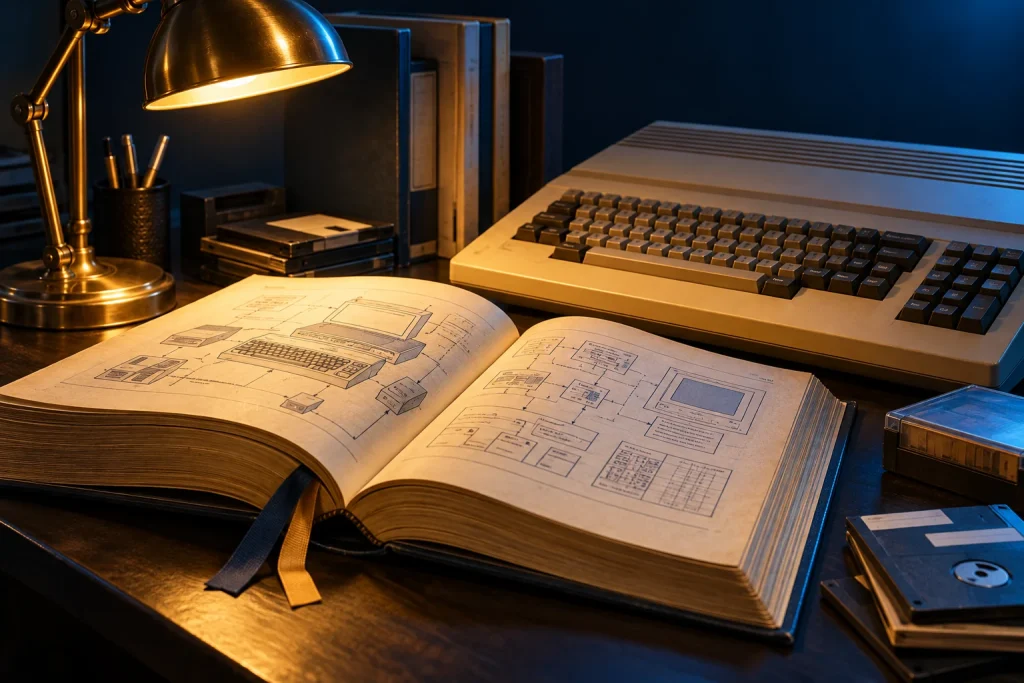
The accompanying image was created with AI for PC.gr as an artistic illustration of this article’s subject.
Σύνταξη & Επιμέλεια: Βλαχογιάννης Λ. Γεώργιος
Μέλος της Ένωσης Συντακτών Εφημερίδων, Περιοδικών και Ηλεκτρονικών Μέσων Βορείου Ελλάδος