

Different kinds of unwanted code
Malware is a broad category. Viruses attach to other carriers, while other malicious programs use different mechanisms. Calling every malfunction a virus obscures useful distinctions.
Before constant connectivity
Removable media and exchanged files could carry unwanted code before Web browsing became common. Protection developed alongside the ways people distributed software.
Recognition has limits
Antivirus tools can examine known patterns and behaviour. A historical product reflects the threats and techniques of its period; it should not be presented as current protection. Alerts also require interpretation because mistakes are possible.
Exhibiting the history
Manuals, screenshots and accounts of incidents can explain this subject without running dangerous software. The most informative story concerns the effect on users and the evolution of defensive practices. Personal computing depends on trust in files, programs and their origins, and this history made that dependence visible.
Sources and further reading
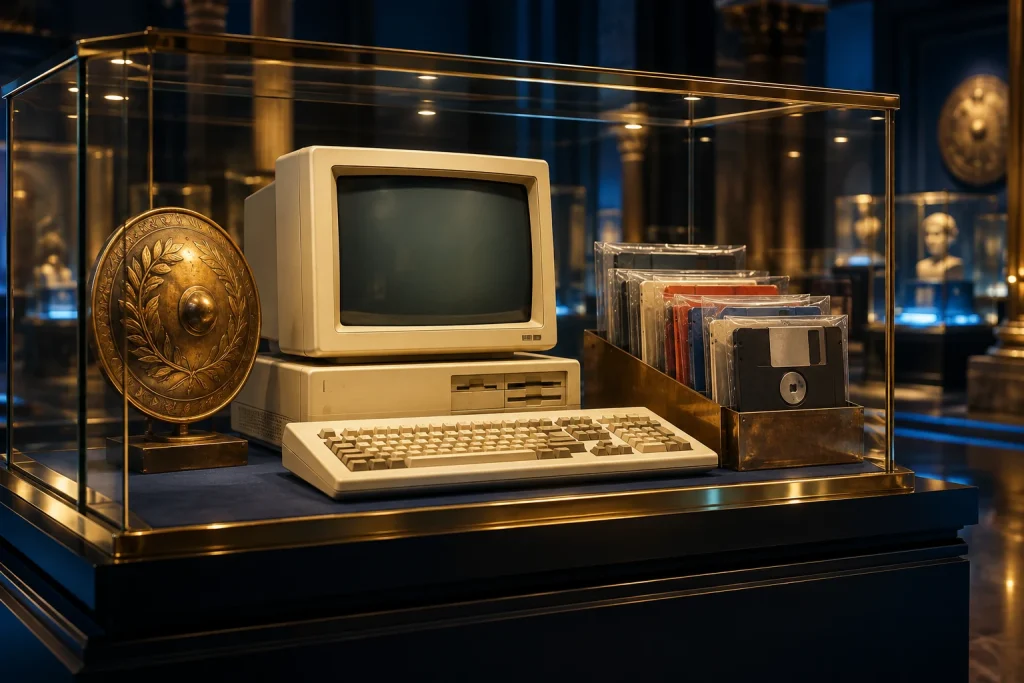
The accompanying image was created with AI for PC.gr as an artistic illustration of this article’s subject.
Σύνταξη & Επιμέλεια: Βλαχογιάννης Λ. Γεώργιος
Μέλος της Ένωσης Συντακτών Εφημερίδων, Περιοδικών και Ηλεκτρονικών Μέσων Βορείου Ελλάδος