
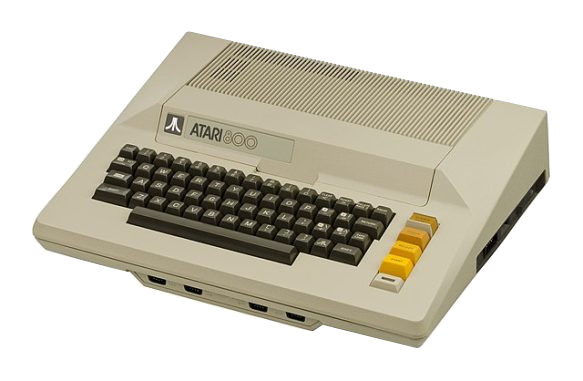
Atari 800
Year of manufacture: 1979-1992
Technical Specifications:
- Processor: MOS Technology 6502, 1.79 MHz
- RAM: 8 KB to 48 KB
- FDD: –
- HDD: –
- Audio: 4 voices, 3.5 octaves
- Connectors/Ports: serial input/output, TV output, monitor output, two cartridge slot, serial, four controller, four internal slots for memory
- Case: Keyboard type
- Monitor: Color
- OS: 400/800 OS
The Atari 800 features a MOS Technology 6502 model processor at 1.79 MHz and memory of 8kB up to 48kB. It run with the operating system of the 400/800 version.
The Atari 8-bit family entered the home computers market in 1979 with models Atari 400 and 800. Later upgraded models include the Atari 600XL, 800XL, 1200XL, 65XE, 130XE and Atari XEGS. They featured custom coprocessor chips, advanced sound and graphic system for improved videogame experience, which was their biggest selling point. In the series included were models rather more affordable, like the Atari 400 or even more high end like the Atari 800.
The Atari 8-bit family’s manufacture ceased in 1992, but their core architecture was already used in the Atari 5200 game console. Some models, like the 65XE were repackaged as consoles while others fell in demise.
Continue reading more about the present model, the Atari 800 here.
PC.GR
The history of personal computers
Explore this digital exhibit with the video guide, which opens the PC.gr presentation in a video window. Source series: TechMuseum.